scenario planning

25 technology trends. Infinite possible futures.

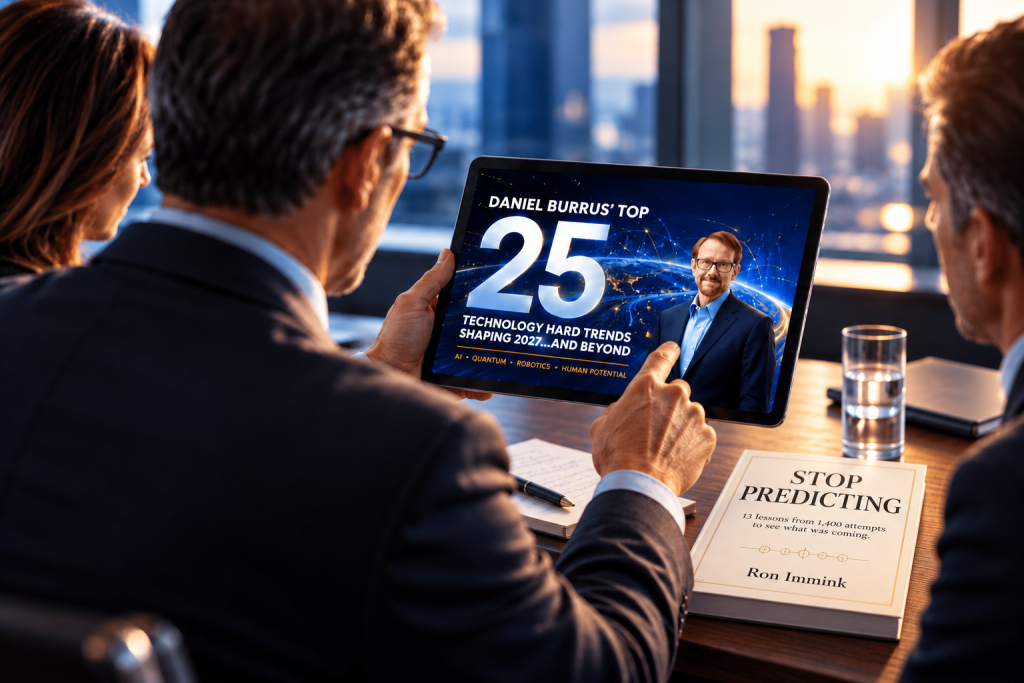
Daniel Burrus (I am a fan) just published his trend report for 2027. The usual list. AI, robotics, quantum computing, synthetic biology, energy, advanced materials, and much more. Each has the potential to reshape industries, business models, competitive advantage, and society itself. Burrus is known for distinguishing between Hard Trends, developments that can be anticipated

25 technology trends. Infinite possible futures. Read More »

Agility is not a trait. It is a habit you build by being wrong.

The lesson from STOP PREDICTING is not only that prediction is difficult. It is also that being wrong is not particularly dangerous. Staying wrong is. A recent Stanford Graduate School of Business article, “Leading Through Change: Why Leadership Agility Matters Now”, makes a very similar argument from the perspective of leadership. Experience can become a

Agility is not a trait. It is a habit you build by being wrong. Read More »

The real AI risk isn’t the answer. It’s the frame.

More than 50 years ago, Pablo Picasso said computers were useless. They can only give you answers. He wasn’t wrong at the time. Humans framed the problem, computers crunched the solution. A new World Economic Forum piece, “How AI is rewriting the decisions that leaders need to make” argues that boundary has quietly dissolved. AI

The real AI risk isn’t the answer. It’s the frame. Read More »

AI can widen the net. It still can’t tell you what you’re willing to risk

The argument of my new book, STOP PREDICTING: 13 Lessons from 1,400 Attempts to See What Was Coming is that the forecast was never the deliverable. The muscle you build by making it, sensing change, questioning your own assumptions, staying loose enough to adapt when you’re wrong, is. AI Is Revolutionizing Strategic Decision-Making  “AI Is

AI can widen the net. It still can’t tell you what you’re willing to risk Read More »

Science fiction is not a blueprint. It is a stress test.

I have argued for years that science fiction is one of the best scenario-planning tools we have. After reading a fascinating article in The Atlantic, I would add one important qualification: you have to read science fiction properly. The article argues that some of Silicon Valley’s most influential entrepreneurs have treated science fiction less as

Science fiction is not a blueprint. It is a stress test. Read More »

When opposite futures are both true

I’ve long used a pendulum framework for scanning: push a trend to its extreme, then ask what counter-reaction it produces. Globalisation produces deglobalisation. Efficiency produces burnout. The pendulum never stops — it swings, and organisations that build strategy around one extreme get caught when it reverses. There is more than one Most leaders assume there’s only

When opposite futures are both true Read More »

Science fiction is a strategic rehearsal space

In May 2023, I published a prompt with a two-word instruction: play Xbox. It had nothing to do with gaming, and everything to do with strategy. A well-designed video game is the most sophisticated engagement engine ever built. It drops you into an unfamiliar world, hands you incomplete information, forces you to make real-time decisions

Science fiction is a strategic rehearsal space Read More »

Mental Sandboxing: think first, spend later

Most leadership teams are not short on intelligence. They are short on protected space to think. Executive meetings are consumed by delivery, targets, people issues and whatever caught fire that week. The urgent crowds out the strategic. Mental Sandboxing is a two-hour strategic rehearsal for leadership teams. No preparation. No generic workshop theatre. No long

Mental Sandboxing: think first, spend later Read More »

Scroll to Top