Digital transformation

Mix the signals

On 22 February 2023, I published a scenario prompt containing 3D-printed batteries, low-code AI, GPS tag darts, nuclear fusion and killer robots. No single signal told me much on its own. What mattered was the sentence underneath them: technology abstraction means everyone plays LEGO with technologies. Technology abstraction means everyone plays LEGO with technologies Technologies […]

Mix the signals Read More »

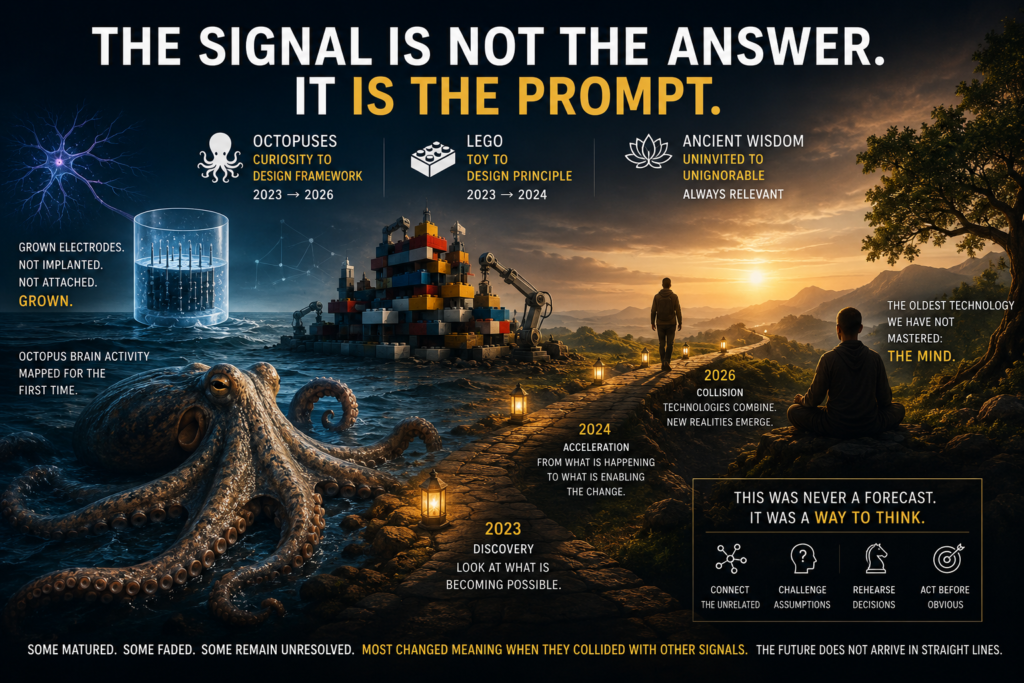
The signal is not the answer. It is the prompt.

My first scenario prompt (#Mindcandy) was about electrodes, brains and octopuses.  It was February 2023. Swedish researchers had grown electrodes inside living brain tissue using a viscous gel. Not implanted. Not attached. Grown. In the same edition: octopus brain activity mapped for the first time, 3D-printed hearts, liquid electronics, robot window washers.” The octopus came

The signal is not the answer. It is the prompt. Read More »

Digital transformation #Mindcandy: Brain capital and agency decay

Use the #Mindcandy as a strategic sensing engine to help leadership teams identify the signals they are missing, the assumptions they are protecting, and the moves they need to make before disruption becomes visible on the P&L. It fuels the strategic conversation about what is next. DM “SESSION” if you want to find out more.

Digital transformation #Mindcandy: Brain capital and agency decay Read More »

Digital transformation #mindcandy: AI lock-in

I use the #Mindcandy as a strategic sensing engine to help leadership teams identify the signals they are missing, the assumptions they are protecting, and the moves they need to make before disruption becomes visible on the P&L. It fuels the strategic conversation about what is next. Book a session.  Palantir’s Alex Karp and Mistral’s

Digital transformation #mindcandy: AI lock-in Read More »

Digital transformation #Mindcandy: cognitive debt

I use the #Mindcandy as a strategic sensing engine to help leadership teams identify the signals they are missing, the assumptions they are protecting, and the moves they need to make before disruption becomes visible on the P&L. It fuels the strategic conversation about what is next. Book a session. Autonomous AI creates a new

Digital transformation #Mindcandy: cognitive debt Read More »

Digital transformation #mindcandy: Model welfare

I use the #Mindcandy as a strategic sensing engine to help leadership teams identify the signals they are missing, the assumptions they are protecting, and the moves they need to make before disruption becomes visible on the P&L. It fuels the strategic conversation about what is next. They built the world’s most powerful AI. They’re

Digital transformation #mindcandy: Model welfare Read More »

June 2026: What the signals said

Recently we started exploring mental sandboxing. The question we asked is if you have a failure fund (nobody does) and how to create space to experiment mentally (without having to spent a fortune). June’s Mindcandy 2026 archive shows exactly why it is needed. The summary June’s Mindcandy archive was not a set of separate posts.

June 2026: What the signals said Read More »

Digital transformation #mindcandy: Proprietary intelligence

You can’t predict the future. You can build the fitness to respond to it. #MindCandy is fuel for strategic conversation about what’s next. Send this to your leadership team in your organisation — or start the conversation yourself. The next AI advantage will not come from access to AI That is already becoming a commodity.

Digital transformation #mindcandy: Proprietary intelligence Read More »

Digital transformation #mindcandy: data liquidity

You can’t predict the future. You can build the fitness to respond to it. #MindCandy is fuel for strategic conversation about what’s next. Send this your leadership team in your organisation — or start the conversation yourself.  Data liquidity leads to AI success Data liquidity is the ease with which data can be reused, recombined

Digital transformation #mindcandy: data liquidity Read More »

Every organisation is growing a synthetic nervous system

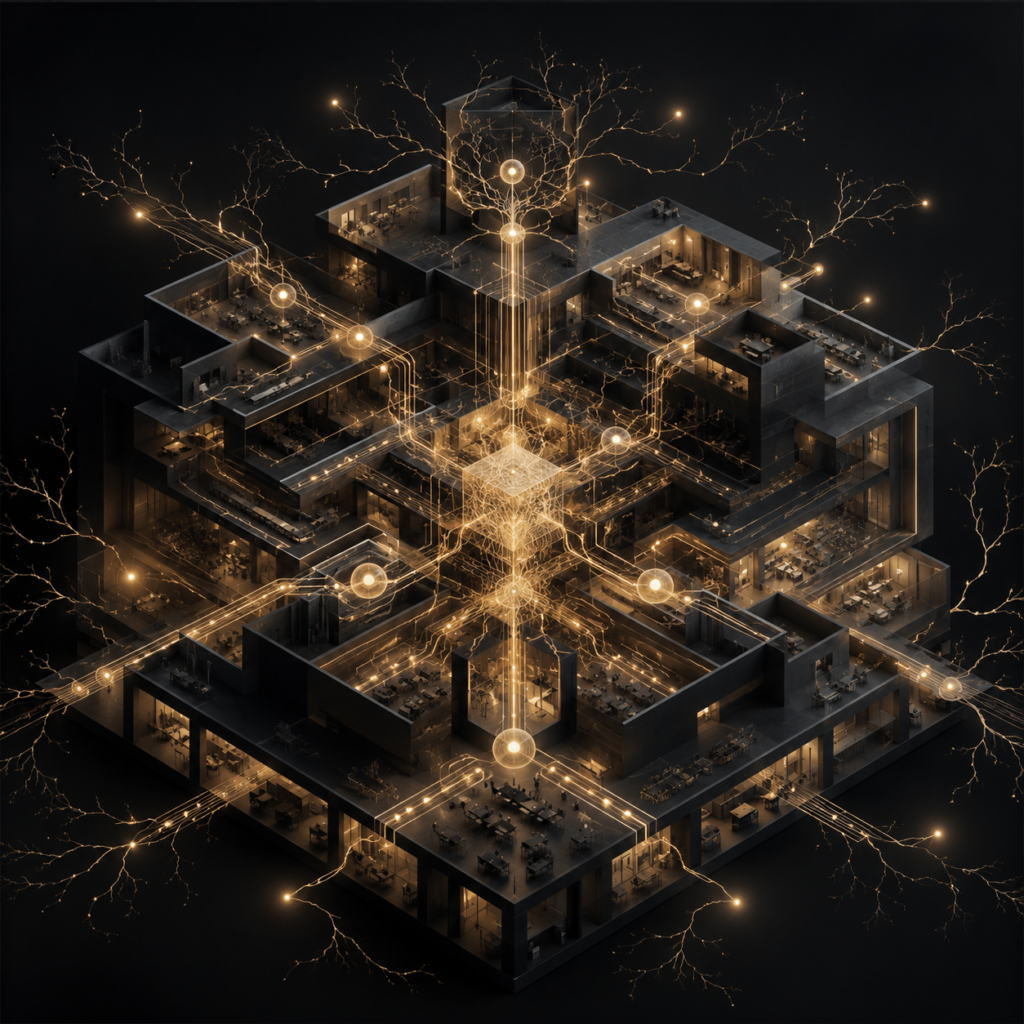
I  have always been obsessed with organisational design. I think organisational design eats culture . Culture is too slow. Form always follows function.  And something larg is happening in the world of organisational design. Every organisation is quietly growing a second nervous system: a synthetic layer of software that does not simply wait to be

Every organisation is growing a synthetic nervous system Read More »

Scroll to Top